
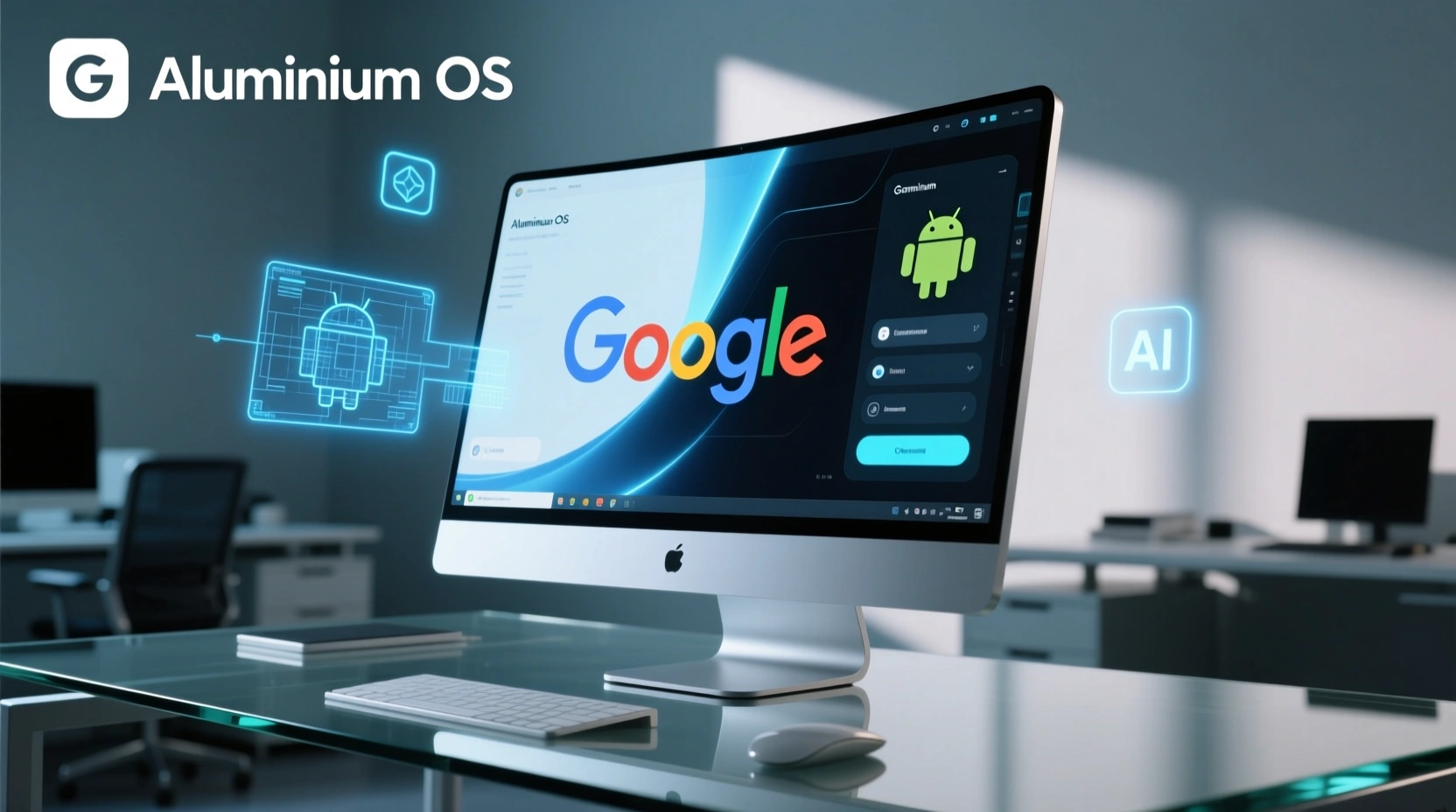
In a bold move to re-define its presence in the personal computer market, Google is developing a new desktop operating system called Aluminium OS. This ambitious project aims to bring the power and flexibility of Android to laptops, desktops, tablets, and other large-screen devices while deeply integrating artificial intelligence (AI) at the system level.
Table of Contents
What Is Aluminium OS?
Aluminium OS is an upcoming operating system from Google that combines elements of Android and ChromeOS into one unified platform designed for desktop-class computing. Unlike ChromeOS — which has long been Google’s primary desktop strategy but struggled to compete with Windows and macOS in the premium segment — Aluminium OS is built from the ground up as an Android-based environment with deep AI capabilities.
The system’s name follows Google’s pattern of using metal-based names (similar to Chromium), illustrating its link to existing platforms while heralding a new direction.
Why Google Is Making Aluminium OS
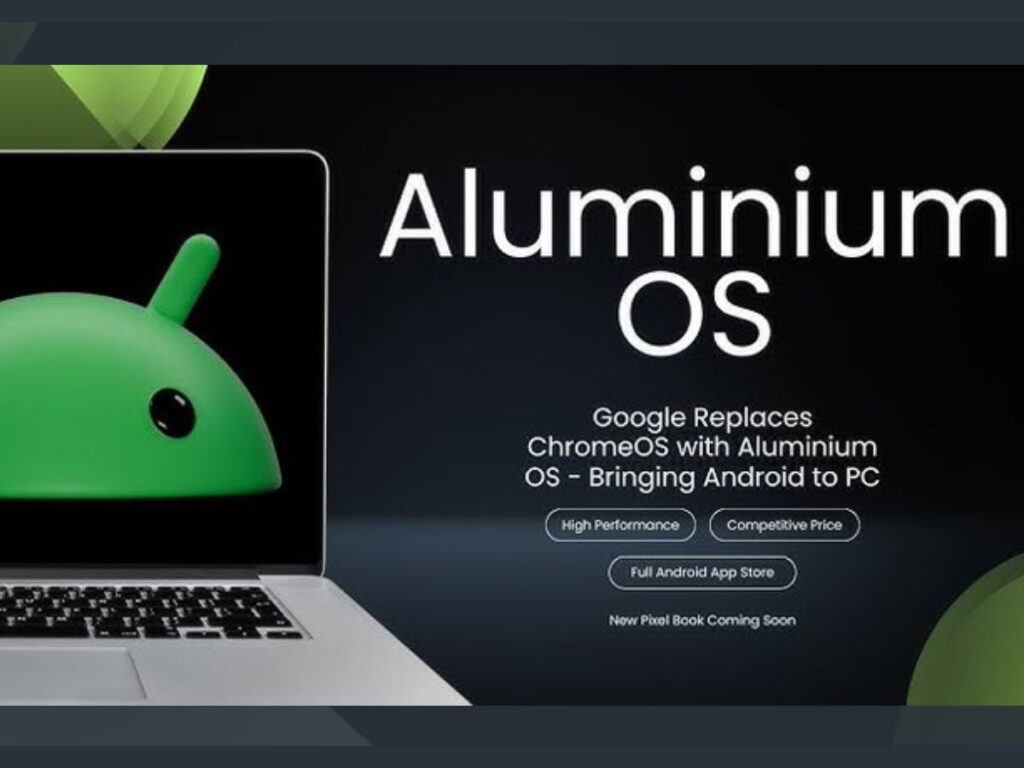
Google has long sought a stronger foothold across all computing categories. Android dominates mobile devices, but Google’s presence in traditional PCs has remained limited, primarily through ChromeOS, which found success in education and budget laptops but has rarely challenged mainstream desktop OS dominance.
By merging ChromeOS and Android, Google hopes to:
- Eliminate fragmentation between device types.
- Provide a consistent experience across phones, tablets, laptops, and desktops.
- Compete more effectively with Windows, macOS, and iPadOS in premium computing.
Built With AI at the Core

One of the defining features of Aluminium OS is its deep integration with Google’s AI technologies, particularly the Gemini family of models. Instead of treating AI as an add-on, Google is making it an integral part of the OS — enabling context-aware assistance, smarter multitasking, proactive suggestions, automated workflows, and enhanced productivity tools throughout the user experience.
According to early reports, AI capabilities will be woven into everything from file organization and search to writing assistance and on-screen suggestions, giving the OS a level of intelligence beyond typical desktop environments.
Key Features (Reported / Expected)
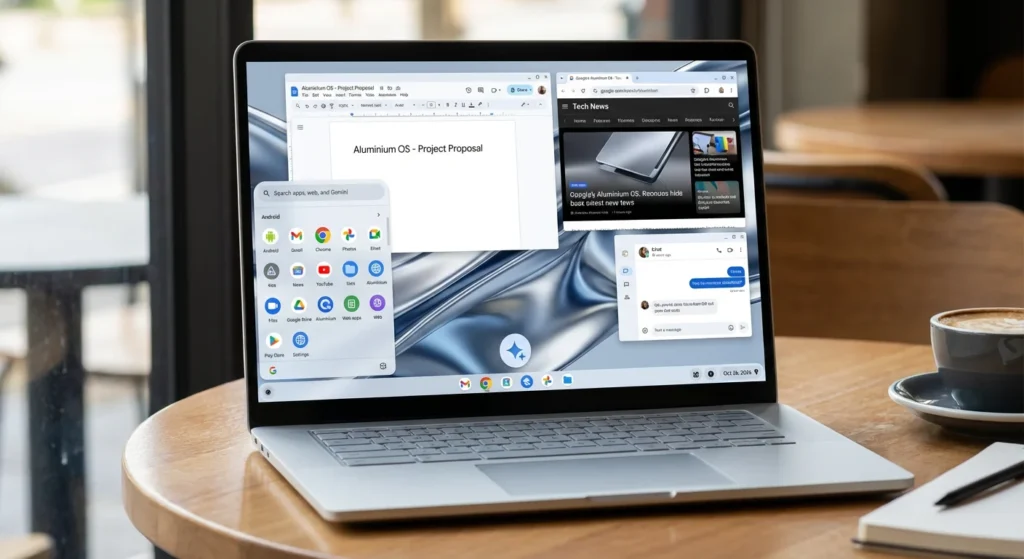
Although Google has not revealed complete official specifications yet, early details suggest the following:
📌 Android-based Foundation
Aluminium OS runs on a customized version of Android, enabling native support for Android apps on larger screens while optimizing the system for laptop and desktop use.
📌 AI-First Integration
Deep Gemini integration promises proactive help — from drafting emails and reports to intelligent context suggestions — woven into the system UI.
📌 Broad Hardware Support
The platform is being tested on a variety of processor architectures — including MediaTek, Intel, and Qualcomm chips — indicating support for both ARM-based and traditional x86 PCs.
📌 Tiered Device Strategy
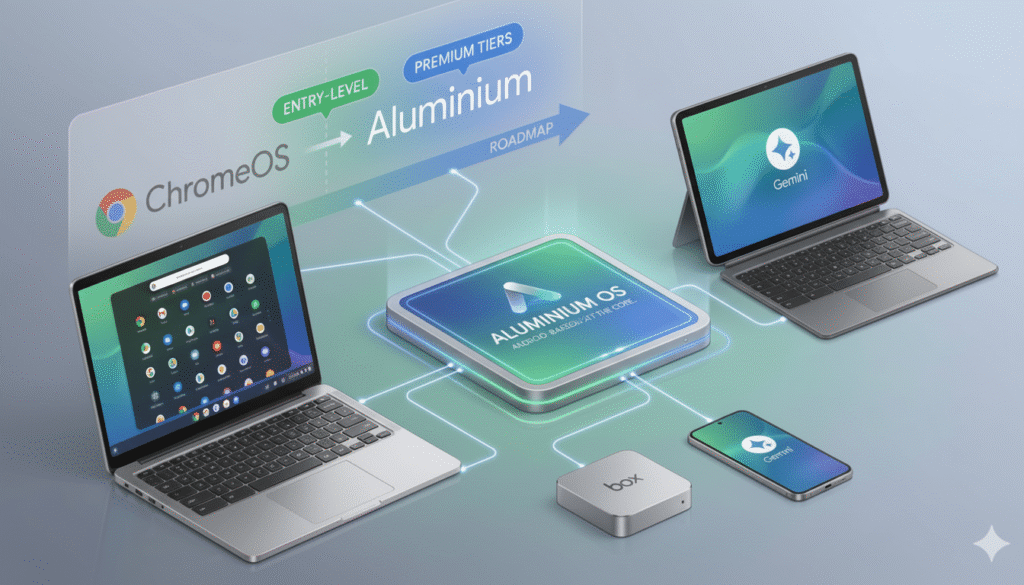
Internal documents reference performance tiers such as AL Entry, AL Mass Premium, and AL Premium, suggesting versions for a wide range of devices from budget laptops to high-end productivity machines.
📌 ChromeOS Transition
Google plans a managed transition from ChromeOS to Aluminium OS. While both systems may coexist initially, the long-term goal appears to be a full migration to the new Android-based platform.
What Happens to ChromeOS?
ChromeOS isn’t disappearing overnight, but its future is clearly tied to Aluminium OS. Google has indicated that the new system will eventually supplant ChromeOS, bringing Android’s ecosystem, developer tools, and AI integration to a broader class of devices.
Existing Chromebooks are expected to continue receiving long-term security updates, though they may not get the full Aluminium experience due to hardware and architectural differences.
Expected Release Timeline
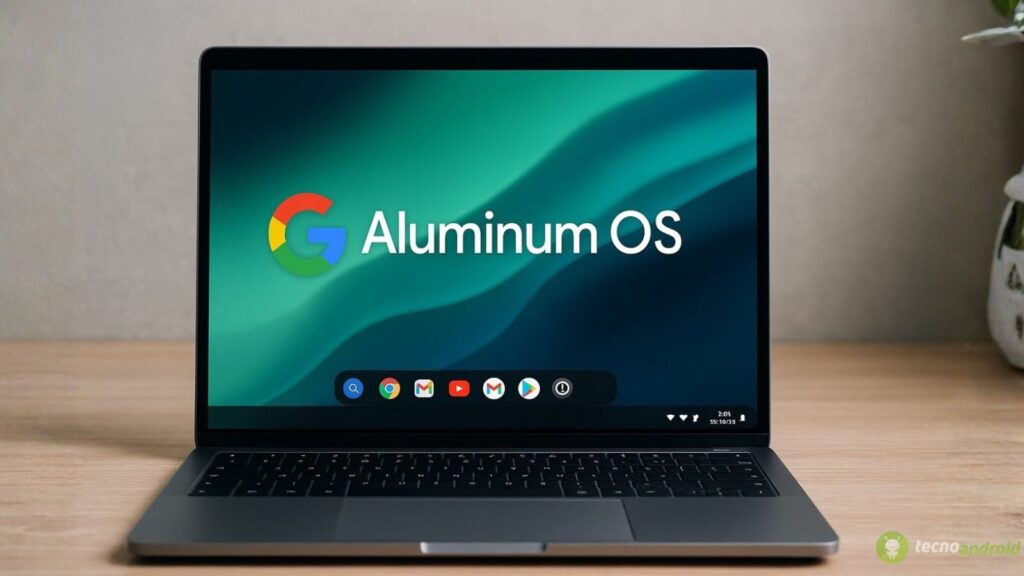
According to reports, Google is targeting a public launch in 2026, likely in conjunction with the release of Android 17. Although exact dates haven’t been officially announced, many analysts believe the first devices featuring Aluminium OS could debut around major tech events such as Google I/O 2026.
Challenges Ahead
Despite the promise, significant questions remain:
- User Interface Design: Google has not yet revealed what the UI will look like or how it will balance traditional desktop workflows with Android-style design principles.
- App Scaling: Ensuring Android apps scale well on large screens with keyboard-mouse interaction is still a known challenge.
- Developer Adoption: A thriving ecosystem of desktop-ready apps will be crucial for competing with established PC platforms.